
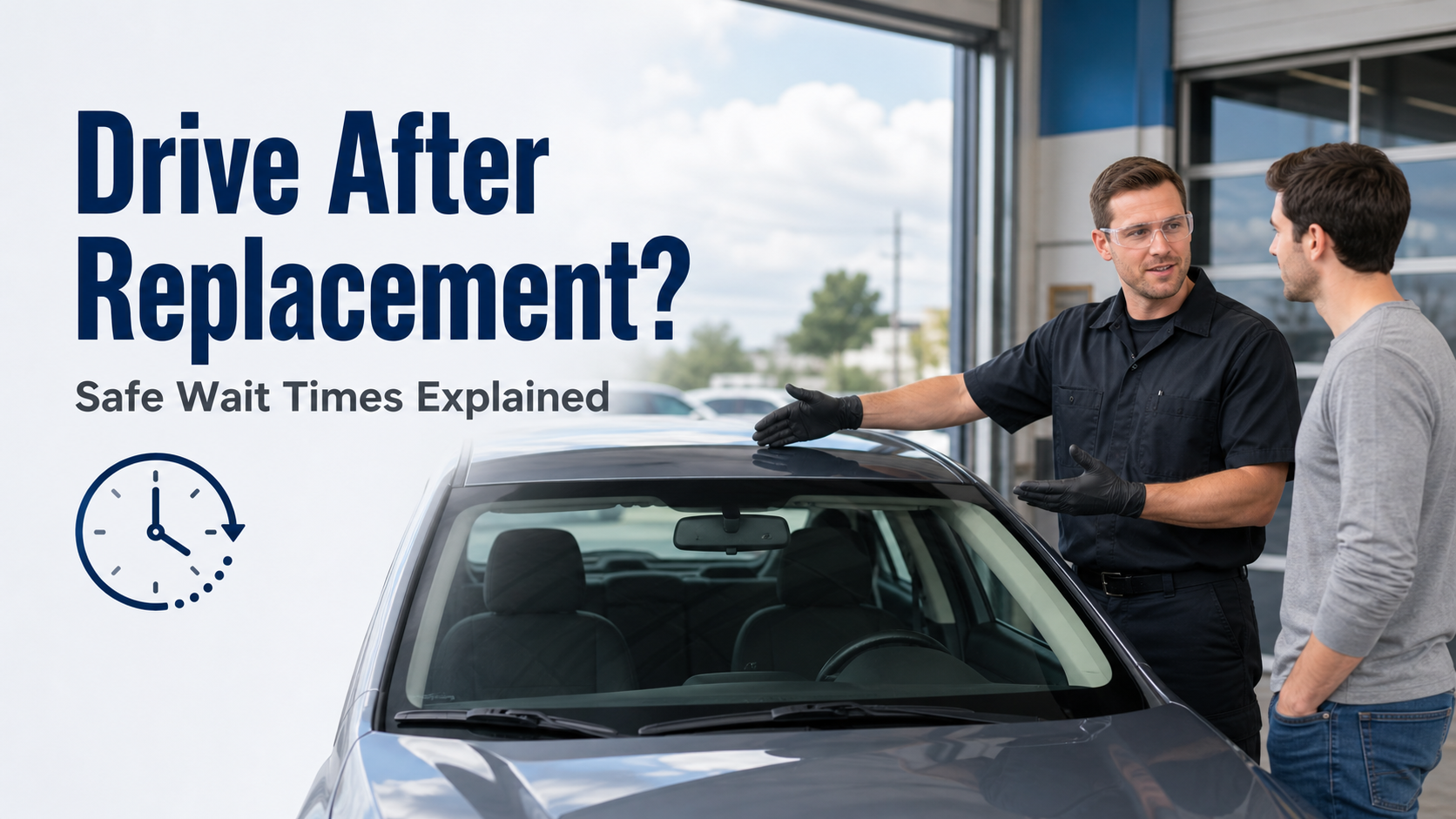
Outcome: After a professional windshield replacement, you can typically drive your vehicle in 1 to 24 hours depending on the adhesive type used. Standard urethane adhesive requires a 24-hour cure time, while fast-cure formulas allow safe driving after just 1 hour. Following proper waiting guidelines ensures structural integrity, prevents water leaks, and maintains vehicle safety compliance.
Skill Level: No driver action required—understanding wait times only
Time Required: 1-24 hours (passive curing time)
Before You Begin: Prerequisites

- Confirm the adhesive type with your auto glass technician (fast-cure vs. standard adhesive)
- Check current ambient temperature and humidity levels
- Verify installation was performed by a certified installer following NAGS (National Auto Glass Specifications) standards
- Receive written post-installation care instructions from your glass installer
- Note the exact installation completion time
- Ensure retention tape and molding are properly applied
Understanding Windshield Adhesive Curing Time

The safe drive-away time (SDAT) after windshield replacement depends entirely on the urethane adhesive’s curing process. According to the Auto Glass Safety Council, polyurethane undergoes a chemical reaction called cross-linking that creates adhesive bonding strength between the laminated glass and your vehicle’s A-pillar frame.
Modern auto glass installation uses two primary adhesive categories. Standard adhesive requires a minimum wait time of 24 hours for complete polymerization, achieving full tensile strength and structural support. Fast-setting adhesive, incorporating chemical accelerators, allows a one-hour cure with sufficient bond strength for safe vehicle operation under normal driving conditions.
Professional installation quality directly impacts adhesive performance. Certified technicians apply primer to ensure proper seal development, creating both a water tight seal and air tight bond essential for airbag deployment, roof strength, and rollover protection.
Step 1: Identify Your Adhesive Type and Safe Drive Away Time
Immediately after your auto glass replacement, ask your technician which urethane type was used. This single factor determines your minimum cure time and when is it safe to wash car after windshield replacement.
Fast-Cure Adhesive (1-Hour SDAT):
- Contains activator chemicals that accelerate curing
- Used by Safelite and most mobile glass service providers
- Allows driving after 60 minutes under optimal conditions
- Commonly specified for express service and same day windshield replacement safe to drive scenarios
- Meets industry standards for immediate structural integrity
Standard Adhesive (24-Hour SDAT):
- Traditional polyurethane formula without accelerators
- Preferred by some auto body shop locations for OEM glass installations
- Requires full 24-hour wait period before driving
- Provides extended cure time for bond maturation in challenging environmental conditions
- Often mandated for certain OEM specifications and manufacturer guidelines
Step 2: Verify Environmental Conditions and Temperature Effects
Environmental factors significantly influence adhesive cure rate and bonding process effectiveness. Temperature and humidity create variable curing conditions that extend or reduce safe wait time after windshield replacement.
Optimal Conditions (60-80°F, 40-60% humidity):
Under climate control in a controlled environment with indoor installation, adhesive performs according to manufacturer recommendations. Fast-cure formulas reach safe drive-away time in exactly 1 hour; standard adhesive completes initial cure in 24 hours.
Cold Weather Installation (Below 50°F):
Low ambient temperature slows the polymerization process. Add 2-4 hours to standard minimum wait time. Professional installers may use heated facilities or special cold weather installation accelerators to maintain adhesive strength development.
Hot Weather Installation (Above 90°F):
Excessive heat can initially speed adhesive set time but may compromise long-term bond strength if moisture content is low. Ensure proper cure duration even when adhesive appears hardened quickly.
High Humidity (Above 70%):
Moisture actually assists polyurethane curing through humidity impact on the chemical reaction. However, direct rain exposure during installation compromises primer adhesion and seal quality.
Step 3: Calculate Your Specific Windshield Replacement Waiting Time
Use this decision matrix to determine how long to wait after windshield replacement before driving:
| Adhesive Type | Temperature Range | Minimum Wait Time | Recommended Wait Period |
|---|---|---|---|
| Fast-cure | 60-80°F | 1 hour | 2-3 hours |
| Fast-cure | Below 50°F | 3 hours | 4-6 hours |
| Standard | 60-80°F | 24 hours | 24-48 hours |
| Standard | Below 50°F | 36 hours | 48-72 hours |
According to quality adhesive manufacturers, exceeding the minimum cure time enhances adhesive bonding and long-term windshield seal time performance. For critical vehicle safety features like airbag deployment zones, conservative waiting guidelines reduce risks of driving immediately after windshield replacement.
Step 4: Follow Post-Installation Care During Adhesive Drying Time
During the adhesive cure time, specific aftercare instructions protect the developing bond and prevent premature stress on the urethane setting time:
First Hour (All Adhesive Types):
- Keep windows slightly open to prevent air pressure changes
- Avoid slamming doors near the dashboard or cowl area
- Do not remove retention tape placed by technician
- Protect vehicle from direct sunlight if possible
- Maintain stable temperature around installation area
First 24 Hours (Critical Period):
- Avoid car wash facilities (automatic or high-pressure)
- Do not drive on bumpy roads after windshield replacement
- Limit highway driving to moderate speeds (under 55 mph)
- Skip sharp acceleration or hard braking
- Postpone off-road driving or rough terrain navigation
- Keep cowl and A-pillar areas free from stress
First Week (Full Cure Period):
- Avoid extreme temperature changes
- Hand-wash vehicle gently around windshield edges
- Monitor for water leaks or wind noise indicating seal issues
- Remove retention tape only after 48 hours minimum
Understanding Weather Impact on Windshield Glue Drying
The bonding wait period varies significantly based on weather conditions during and after glass replacement. Professional windshield installation accounts for these environmental factors, but understanding weather impact helps you make informed decisions about when can I drive my car after windshield replacement.
Winter Installations: Cold ambient temperature below 32°F requires special consideration. How long to cure windshield in winter extends to 48-72 hours for standard adhesive. Mobile auto glass replacement in cold climates should occur in heated vehicles or indoor facilities when possible. Some installers apply heat lamps during the initial cure time to accelerate bonding process.
Summer Installations: Hot weather above 90°F accelerates initial adhesive set time but requires vigilance. How long to cure windshield in summer still demands respecting manufacturer recommendations despite apparent rapid set adhesive performance. High dashboard temperatures can create uneven curing.
Humid Conditions: Moisture enhances polyurethane curing through the cross-linking process. Humidity impact is generally positive, though excessive condensation during installation can compromise primer effectiveness.
Troubleshooting Common Wait Time Issues
Issue: Need to drive before minimum cure time expires
Solution: If emergency driving is unavoidable, limit speed to 25 mph maximum, avoid rough roads, and drive for less than 5 miles total. Contact your auto glass technician immediately to assess structural support adequacy and potential reinstallation needs.
Issue: Noticed water leaks after driving within recommended wait period
Solution: Water leaks indicate improper seal development during the curing timeline. Return to your glass installer immediately. Reputable providers following Auto Glass Safety Council best practices will re-seal or reinstall at no charge. Document the leak location and severity.
Issue: Hearing wind noise at highway speeds after waiting full cure time
Solution: Wind noise suggests incomplete air tight bond or molding installation errors. This compromises vehicle safety beyond comfort. Schedule immediate inspection with a certified installer. Wind noise often indicates gaps that also compromise structural integrity during airbag deployment scenarios.
Issue: Unsure if adhesive is fully cured after waiting period
Solution: How to tell if windshield adhesive is cured: Gently press the windshield edge near the A-pillar. Fully cured urethane shows zero movement or flex. Any shifting indicates incomplete bond maturation. Wait an additional 12-24 hours before reassessing.
Issue: Retention tape lifting before 24-hour mark
Solution: Do not remove lifting tape manually. The tape serves as temporary support during adhesive strength development. Contact your installer if tape detaches; they may need to reinforce the installation area.
OEM Glass vs. Aftermarket Glass: Cure Time Differences
The choice between OEM glass and aftermarket glass does not significantly affect adhesive drying time, but installation protocols may vary. OEM windshield replacement often follows stricter manufacturer guidelines requiring extended recommended wait time even with fast-cure formulas. Insurance claim processing through comprehensive coverage may influence glass selection, but always confirm SDAT with your technician regardless of glass origin.
Both OEM specifications and quality aftermarket options use the same urethane adhesive technology and primer systems. The key factor remains the adhesive type (fast-cure vs. standard) rather than glass manufacturer.
Mobile Glass Service vs. Shop Installation: Curing Considerations
Mobile windshield replacement offers convenience but presents environmental challenges. Shop windshield replacement vs mobile cure time can differ based on controlled environment access. Indoor installation provides stable temperature, humidity control, and protection from weather during critical initial adhesive performance hours.
However, professional mobile glass service providers using quality materials and proper technique achieve identical adhesive bonding strength to shop installations. The determining factor is how soon drive after mobile windshield replacement guidelines are followed, not the installation location itself.
For more detailed information on how soon you can drive after windshield replacement in various conditions, professional auto glass services provide specific guidance based on your vehicle make, model, and local climate conditions.
Speed Restrictions and Driving Limitations After Installation
Even after meeting minimum wait time after new windshield installation, gradual return to normal driving preserves long-term adhesive performance and structural support:
Days 1-2: Limit speeds to 45 mph. Avoid highways and interstate driving. The bond strength continues developing beyond initial cure, especially under vibration and stress from high-speed airflow.
Days 3-7: Resume normal highway driving gradually. The windshield adhesive not fully cured driving risks decrease substantially, but complete bond maturation requires one full week under most curing conditions.
First Month: Avoid extreme off-road conditions that create unusual stress on the windscreen installation. Rock chips and impacts have greater potential to compromise newer installations.
What Happens If You Drive Too Soon After Windshield Replacement
Understanding risks of driving immediately after windshield replacement helps prioritize safety over convenience. Premature driving before adequate adhesive strength development causes:
- Seal Failure: Incomplete water tight seal allows moisture intrusion, leading to dashboard damage, electrical issues, and interior corrosion
- Structural Weakness: The windshield provides 30-60% of roof strength in rollover scenarios. Insufficient bond strength compromises rollover protection
- Airbag Deployment Issues: Passenger-side airbags deploy against the windshield. Weak adhesive allows glass ejection during deployment, eliminating airbag effectiveness
- Complete Seal Failure: Vibration from driving, especially on bumpy roads, can completely dislodge improperly cured installations
- Insurance Complications: If seal failure occurs due to ignored technician instructions, your insurance approved windshield replacement warranty may be voided
Next Steps: Long-Term Windshield Care
After Full Cure (1 Week+):
- Resume normal car wash routines, including automatic facilities
- Inspect seal quarterly for any wind noise or water leaks
- Maintain wiper blades to prevent scratching new glass
- Address rock chips immediately to prevent crack propagation
- Keep documentation from certified technician for warranty claims
When to Contact Your Auto Glass Technician:
- Any visible gaps between glass and molding
- Water intrusion along windshield edges
- Whistling or wind noise at any speed
- Visible adhesive residue on dashboard or interior
- Glass movement when pressing firmly on edges
Professional Maintenance Schedule:
Have a certified installer inspect your windshield seal annually, especially before severe weather seasons. Professional installation combined with proper aftercare instructions ensures your auto glass provides maximum vehicle safety and structural integrity for years.
Conclusion: Prioritizing Safety Over Convenience
The answer to how long before driving after windshield replaced is clear: respect the minimum cure time specified by your installer, typically 1 hour for fast-cure adhesive or 24 hours for standard formulas. However, extending the waiting period beyond minimums when possible provides additional safety margin, particularly in non-optimal environmental conditions or for vehicles with comprehensive coverage requiring OEM specifications compliance. Your windshield serves as a critical structural component—proper curing timeline adherence protects both investment and safety.