
Yes, replacing a windshield in cold Indiana weather is worth it, as long as the installer uses a urethane adhesive rated for the current temperature and controls the curing environment. Many standard urethanes are designed for application at around 40°F and above. In colder conditions, an auto glass technician should use a cold-weather-rated urethane, a heated workspace, or both. Indiana winter driving conditions make this decision time-sensitive, especially when a cracked windshield limits visibility during snow or ice events.
Indiana winters vary widely by region. According to National Weather Service climate normals, southern Indiana averages around 10 inches of snow per season, Indianapolis about 25 inches, Fort Wayne over 30 inches, and lake-effect areas near South Bend often 60 inches or more. Temperatures regularly drop into the teens and single digits between December and February statewide. This creates a recurring dilemma for drivers: wait out the cold and risk the crack spreading, or schedule replacement now and trust the installer’s cold-weather protocol.
Can You Replace a Windshield in Freezing Temperatures?
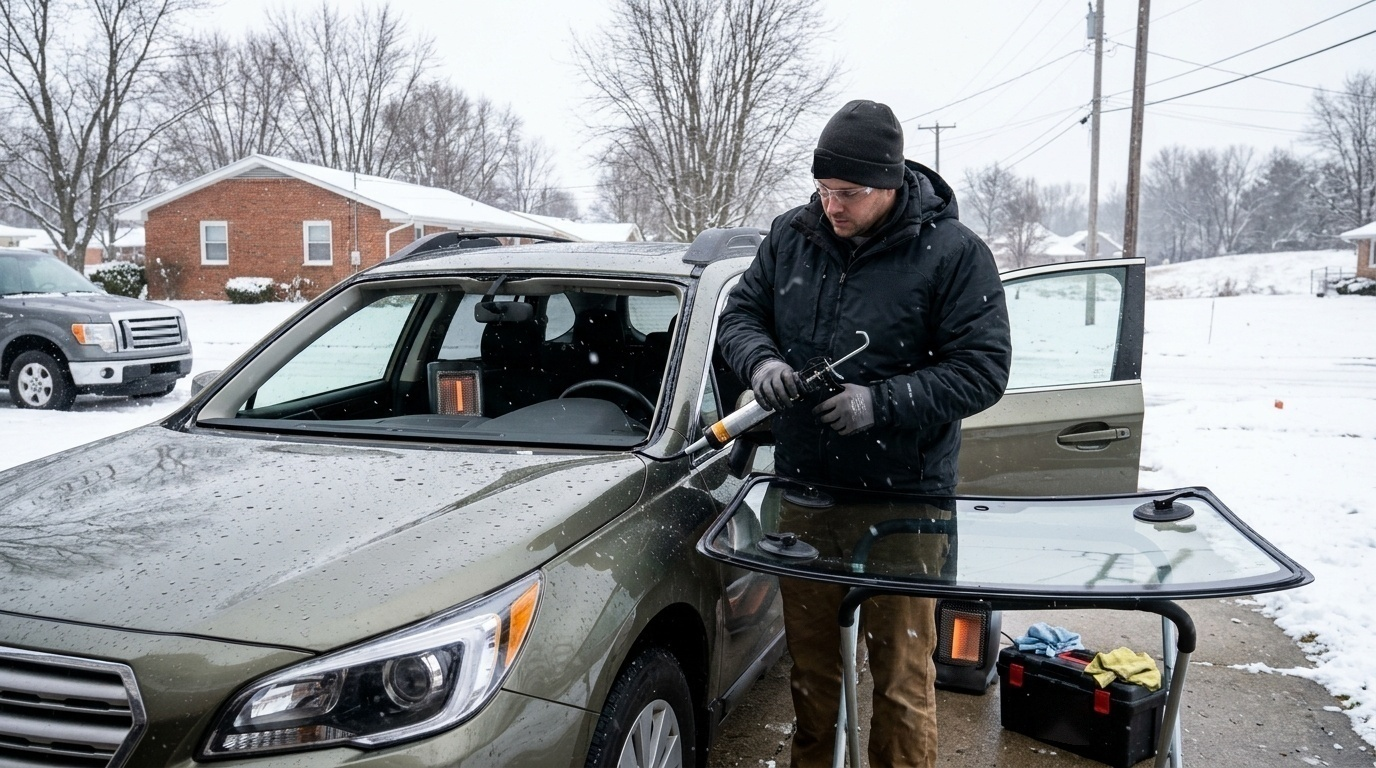
Yes, you can replace a windshield in freezing temperatures, but the process requires adjustments. Standard urethane adhesives are typically designed for moderate temperatures. Below that range, the auto glass technician should switch to an all-weather or cold-weather urethane formulated for cold climate glass installation. Each product has its own minimum application temperature and Safe Drive-Away Time (SDAT), the minimum wait before the vehicle can be driven safely.
Technicians typically manage freezing conditions in one of three ways:
- A heated indoor bay
- A portable heater aimed at the bonding surface
- A cold-weather urethane chemically formulated to cure at lower temperatures
During a true cold snap, reputable Indiana shops combine at least two of these methods rather than relying on adhesive alone.
How Cold Is Too Cold for Windshield Replacement?
Below 0°F, outdoor windshield replacement is generally not recommended, even with specialized adhesive. Many Indiana auto glass shops postpone mobile replacement when temperatures fall below about 10–20°F unless a heated or temperature-controlled garage is available. At these extremes, urethane cures very slowly, and cold glass is more prone to stress cracks during handling and installation.
What You Get With Winter Windshield Replacement in Indiana
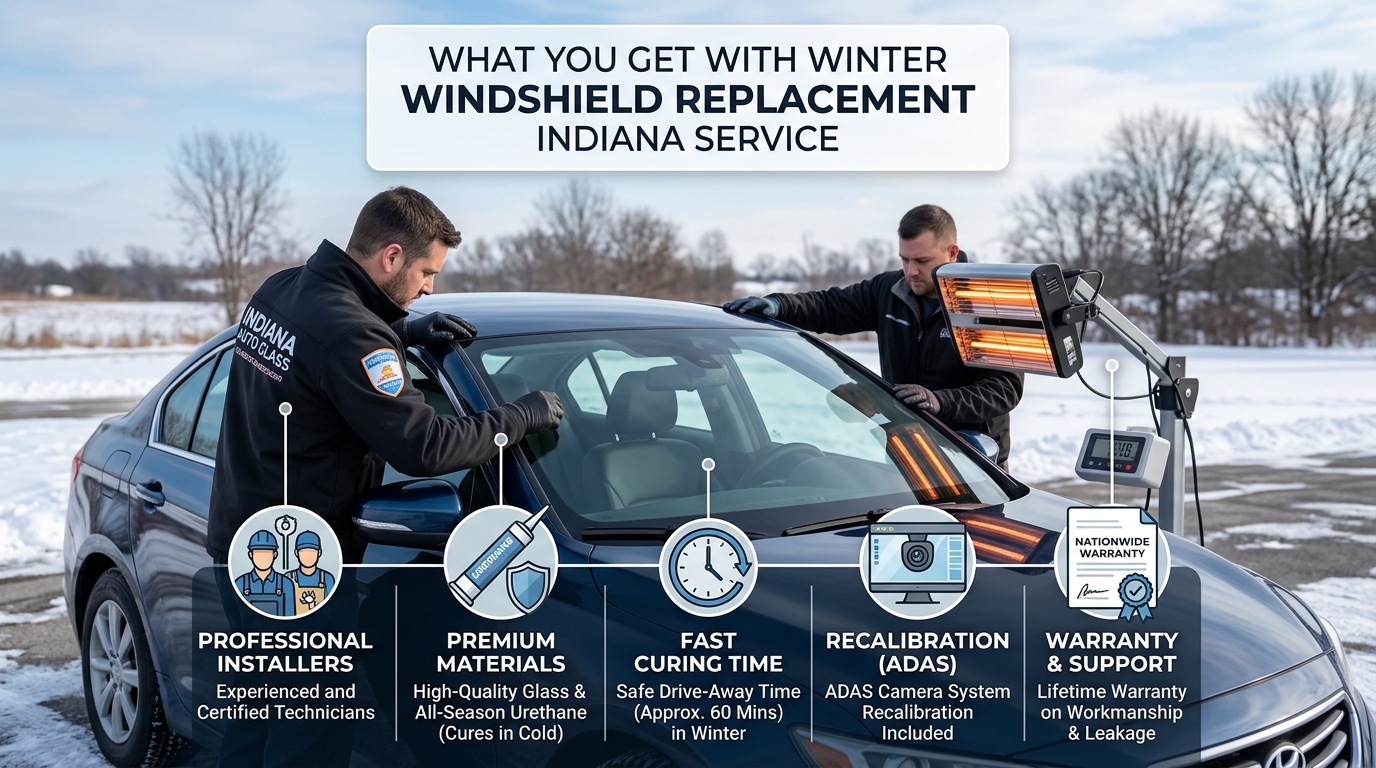
A complete winter windshield replacement Indiana service should include more than just swapping the glass. Here’s what’s typically included versus what may cost extra.
Included in Standard Service
- OEM glass or high-quality aftermarket DOT-compliant safety glass
- Urethane adhesive application and windshield sealing
- Reconnection of rain sensors and other basic vehicle sensors
- A stated Safe Drive-Away Time based on the urethane used and current conditions
- A workmanship warranty (terms vary by shop; many offer lifetime warranties against leaks and installation defects)
Ask your installer for written confirmation of which urethane product they’re using and its Safe Drive-Away Time at the current outdoor temperature. A technician who can’t answer this on the spot is a red flag for winter installation quality.
Extras You May Need to Pay For
- ADAS calibration or recalibration ($150–$500, depending on vehicle and calibration type)
- A mobile service surcharge for cold-weather setup at some shops
- An upcharge for OEM glass over aftermarket
- Moldings, clips, or sensor brackets that can’t be reused
Some shops bundle these into a single price rather than itemizing them, so request a full quote breakdown before authorizing work. This lets you compare a mobile provider and a brick-and-mortar shop on equal terms.
Windshield Replacement Cost in Indiana: 2026 Breakdown
Windshield replacement costs vary based on vehicle type, glass source, ADAS features, and seasonal demand. Typical 2026 ranges:
| Service Type | Typical Cost Range (2026) | Notes |
|---|---|---|
| Standard windshield replacement | $250–$500 | Non-ADAS vehicles, shop installation |
| ADAS-equipped vehicle replacement | $500–$1,500+ | Includes calibration; luxury models can run higher |
| Mobile winter service surcharge | +$50–$100 (at some shops) | Not all providers charge this |
| OEM glass upgrade | +$100–$500 | Over aftermarket pricing |
| Windshield chip repair | $60–$150 | Often covered fully by insurance |
Mobile scheduling in winter may carry weather-dependent fees when technicians need portable heating equipment. For example, a 2019 Honda CR-V with Honda Sensing (lane-keeping camera) can run roughly $650–$900 total once ADAS calibration is added. A 2012 Toyota Corolla without ADAS typically lands around $250–$350 in a heated shop bay.
Pricing also varies within Indiana. Shops in the Indianapolis metro area tend to sit toward the higher end of these ranges due to demand and labor rates, while shops in smaller cities may quote somewhat lower for comparable work. Always get at least two quotes.
Does Windshield Adhesive Work in Cold Weather?
Yes, windshield adhesive works in cold weather when the correct cold-weather urethane is selected and the technician follows the manufacturer’s temperature and humidity guidelines. Cold slows curing significantly, so Safe Drive-Away Time gets longer as temperatures drop.
How Long Does Windshield Urethane Take to Cure in Cold?
Two numbers matter here:
- Safe Drive-Away Time: In warm conditions, fast-cure urethanes may allow driving in as little as 30–60 minutes. In cold conditions, this can stretch to several hours depending on the product.
- Full cure: Most urethanes take 24–72 hours to fully cure, and longer in sustained cold without supplemental heat.
During the cure window, avoid slamming doors, driving on rough roads, going through high-pressure car washes, or removing retention tape. Pressure changes and vibration can disturb a bond that hasn’t fully set.
Minimum Temperature for Windshield Adhesive to Set
There’s no single minimum temperature. It depends on the specific urethane product. Standard formulas are typically rated for warmer conditions, while cold-weather formulas are rated for application well below freezing. Below 0°F, active heating is strongly recommended regardless of the product. Technicians often measure the actual glass and pinch-weld surface temperature with an infrared thermometer rather than relying on air temperature alone, since metal body panels can be colder than the surrounding air.
Expected Benefits & ROI Analysis
Replacing a cracked windshield before an Indiana winter storm delivers real safety value. The windshield helps support the roof in a rollover and gives the passenger-side airbag a surface to deploy against. Industry sources commonly cite the windshield as providing up to 30% or more of a vehicle’s cabin structural strength.
Winter Driving Visibility Benefits
- Eliminates glare, fogging, and ice buildup along existing cracks
- Restores proper function of rain sensors and other windshield-mounted sensors
- Stops crack expansion caused by freeze-thaw temperature swings
- Keeps the ADAS camera view clear for lane-keep and collision alerts
Temperature swings are the biggest hidden cost of delaying replacement. A crack exposed to a 20°F overnight low followed by a 40°F afternoon, plus defroster heat, goes through repeated expansion and contraction that can make it spread quickly. What starts as a $90 chip repair can become a $400+ full replacement if it’s left through a few hard freeze-thaw cycles.
Insurance Claim Considerations
Many Indiana auto insurance policies cover windshield damage under comprehensive coverage, and many insurers waive the deductible for chip repair. Repairing a chip before it spreads, especially into the ADAS camera zone, can save you from a full replacement and the calibration costs that come with it. Indiana does not require insurers to offer zero-deductible glass coverage, unlike some states, so confirm your comprehensive deductible before assuming a $0 out-of-pocket repair.
Who Should Replace a Windshield in Winter?
- Drivers with cracks in the driver’s line of sight: visibility safety outweighs scheduling convenience.
- Vehicles with ADAS camera systems: damage near the camera can affect lane-keep and collision warnings.
- Anyone with access to a heated garage or shop: this ensures proper curing without compromise.
- Drivers with spreading cracks: waiting through freeze-thaw cycles usually makes the damage worse.
A practical example: a driver commuting on I-65 in Northwest Indiana during a lake-effect snow event, with a crack directly in their line of sight, should treat replacement as urgent, even if that means arranging a heated-bay appointment within 24–48 hours.
Who Should Wait for Warmer Conditions?
- Drivers with small chips outside the line of sight: a chip repair works as a temporary fix.
- Drivers without access to a heated workspace during a cold snap.
- Vehicle owners during active winter storms: technicians often reschedule for safety.
- Anyone facing sustained temperatures below 0°F.
In these cases, a professional chip repair or a temporary DIY resin kit can stabilize the damage until temperatures rise into the range your installer’s urethane is rated for, or until an indoor appointment opens up.
Alternatives to Full Replacement
Temporary Windshield Chip Repair
Windshield chip repair typically costs $60–$150 and takes about 30 minutes. It can serve as a fix until conditions allow a full replacement, and in many cases it removes the need for one. It works best for chips smaller than a quarter and short cracks that haven’t reached the edge of the glass.
Heated Garage Windshield Replacement Options in Indiana
Many Indiana auto glass shops have indoor, temperature-controlled bays for winter service, which allow proper urethane curing regardless of outdoor conditions. If you’re choosing between mobile service and an in-shop appointment during a cold stretch, ask whether in-shop installation is available at no extra cost. It’s often the better option.
Scheduling for the Best Time to Replace a Windshield in an Indiana Winter
When indoor facilities aren’t available, midday to mid-afternoon (roughly noon to 4 PM) usually offers the warmest outdoor temperatures. Scheduling around a warm spell, which is common even in January when a brief thaw pushes temperatures into the 30s and 40s, can reduce or eliminate the need for supplemental heating.
Final Verdict: Is It Worth It?
| Condition | Verdict |
|---|---|
| Temperature within the urethane’s rated range, using a cold-weather product | Worth it. Proceed with a trusted technician. |
| Access to a heated garage or shop bay | Worth it. Ideal curing conditions. |
| Temperature below 0°F, no heat source | Not worth it. Wait or use a temporary repair. |
| Crack in or near the ADAS camera zone | Worth it. Safety systems depend on a clear view. |
| Small chip outside the line of sight | Not worth it yet. Repair instead. |
Indiana drivers with a cracked windshield shouldn’t assume winter weather rules out safe replacement. Does temperature affect windshield installation quality? Yes, but mainly when adhesive selection and the curing environment are ignored. Choosing a qualified auto glass technician who follows cold-weather installation protocols makes replacement both safe and worthwhile, even during an Indiana winter.