
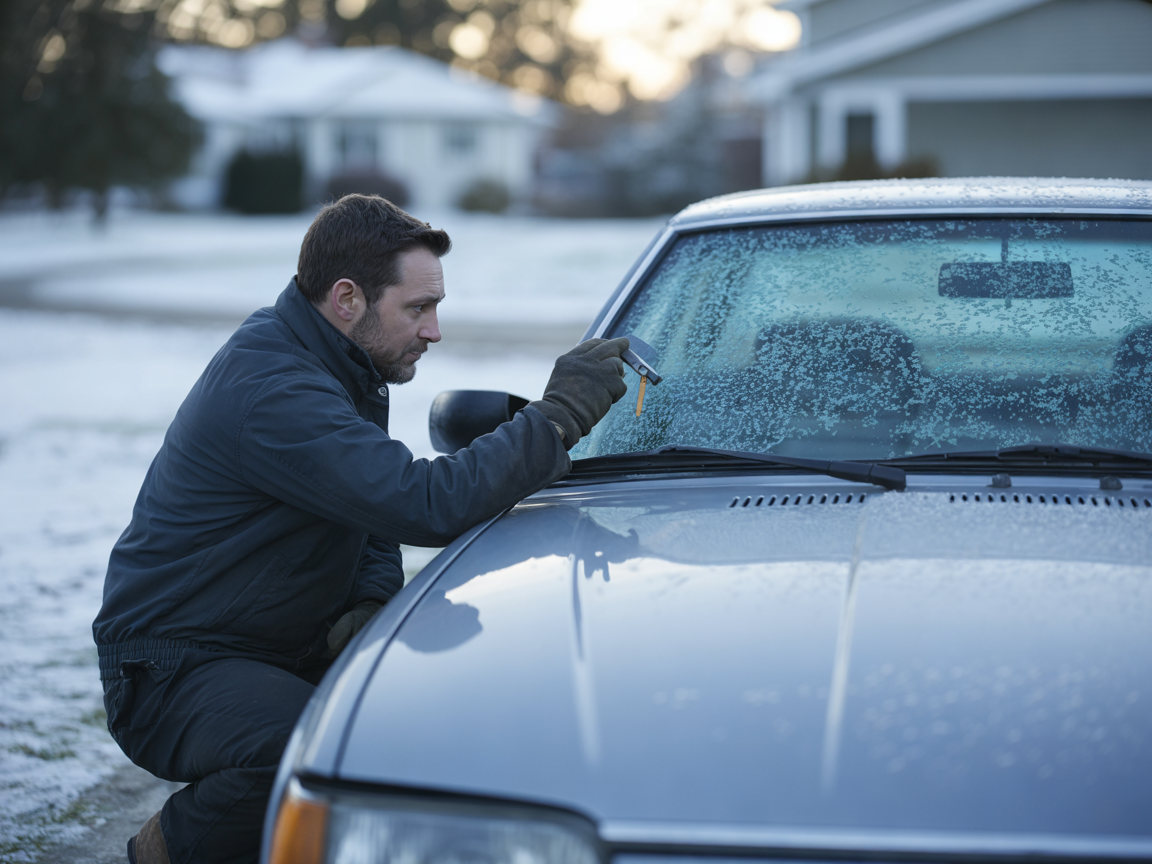
Yes, windshield chip repair is the better choice in winter if the chip is smaller than a quarter (under 1 inch, roughly 2.5 cm in diameter, including any spider cracking) and any crack is under 3 inches long. According to auto glass professionals’ guidance on windshield chip repair vs. replacement, repair is the better financial and practical choice when the damage sits outside the driver’s direct line of sight and hasn’t spread. Full windshield replacement becomes necessary when the damage exceeds the repairable size limit, the crack reaches the edge, or the windshield’s structural integrity is compromised.
Cold weather complicates this decision. Freezing temperatures and sudden temperature swings put extra stress on the glass, making windshield cracks spread faster than in summer. The question isn’t just “Can this be fixed?” but “Will it still be fixable next week?” A chip that measures 4 mm today can grow into a 10-inch crack after a single hard freeze-thaw cycle, which is why timing matters as much as size when evaluating repair eligibility.
As a practical rule of thumb, technicians use three filters before quoting a repair: diameter, location, and contamination. If a chip passes all three (small, outside the sightline, and free of dirt or moisture), it almost always qualifies for a sub-$150 repair instead of a $300+ replacement.
What You Get: Chip Repair vs Full Windshield Replacement
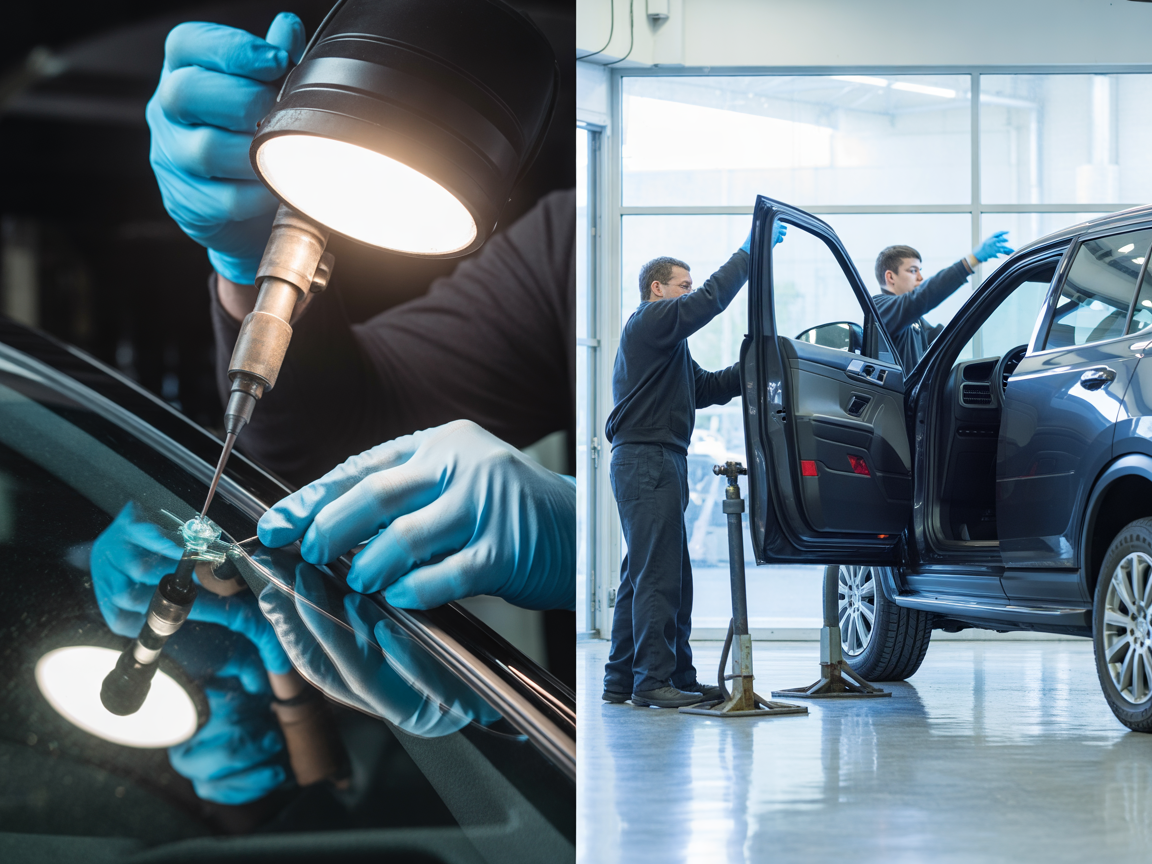
Windshield Chip Repair Inclusions
- Injection of repair resin into the damaged area
- UV or heat curing to harden the resin
- Polishing for a near-invisible finish
- 15–30 minute service time
- Mobile repair available at your home or office
Full Windshield Replacement Inclusions
- Complete removal of the damaged windshield
- Installation of new OEM glass or an aftermarket equivalent
- Urethane adhesive curing (weather-dependent)
- ADAS calibration for vehicles with lane-assist or automatic braking cameras
- Post-installation safety inspection
A certified auto glass technician determines which option applies after measuring the damage against industry repair standards, such as those developed by the National Windshield Repair Association. Technicians typically use a calibrated gauge or template card to confirm chip diameter and crack length before quoting a price, so the final decision isn’t a visual guess. It’s a measured classification.
It’s worth noting that repair does not restore the windshield to like-new condition. It stabilizes the damage and prevents spreading, but usually leaves a small blemish. Replacement, by contrast, fully resets the glass but introduces variables like adhesive cure time and recalibration accuracy that repair avoids entirely.
Cost Breakdown: 2026 Pricing Data
| Service | Average Cost (2026) | Time Required |
|---|---|---|
| Windshield chip repair | $60–$150 | 20–30 minutes |
| Windshield crack repair (under 3 in.) | $100–$200 | 30–45 minutes |
| Windshield replacement (non-ADAS) | $300–$500 | 1–2 hours |
| Full windshield replacement with ADAS calibration | $700–$1,500 | 2–4 hours |
Many comprehensive auto insurance policies waive the deductible entirely for chip repair, because insurers would rather pay $100 now than $1,000 later for a claim tied to a spreading crack. Confirm coverage details with your provider, since terms for winter windshield damage claims may differ from standard policy terms.
Pricing also varies by region. Urban markets with higher labor rates may push replacement costs toward the top of the $300–$500 range, even for non-ADAS vehicles, while rural mobile services sometimes charge a $25–$50 trip fee on top of base repair pricing. Always ask for a written quote that separates parts, labor, and calibration fees so you can compare it against the 2026 averages above.
For drivers without comprehensive coverage, paying $60–$150 out of pocket for chip repair is still dramatically cheaper than financing a $1,000+ replacement, making it one of the few auto maintenance costs with an immediate, measurable return.
Expected Benefits & ROI Analysis
Does Cold Weather Affect Windshield Repair?
Yes. Resin cures more slowly in freezing temperatures, so technicians rely on UV lamps or heated enclosures to complete the job. A trained technician with mobile equipment can still work outdoors, but a winter chip repair may take 10–15 minutes longer because the glass surface needs to be pre-warmed. Most reputable mobile providers carry portable heat blankets or in-vehicle heaters for this reason, so a 20°F morning shouldn’t rule out a repair appointment.
Will a Windshield Chip Get Worse in Winter?
Yes. Freeze-thaw cycling accelerates cold-weather windshield damage. Water seeps into the chip, freezes, expands, and can force a crack to spread overnight. Freeze-thaw damage is the top reason technicians recommend immediate repair rather than waiting until spring. A single overnight freeze can turn a $75 repair into a $400 replacement, which is why same-week scheduling matters more in winter than in any other season.
ROI Comparison
- Repair now: $60–$150, preserves the original factory seal, no ADAS recalibration needed
- Delay and replace later: $300–$1,500, plus potential ADAS calibration costs
- Average savings from early chip repair: 70–85% compared to full replacement
- Time savings: 20–30 minutes for repair versus 2–4 hours for replacement with calibration
This makes chip repair one of the highest-ROI winter car maintenance steps available to drivers. Beyond the direct savings, early repair also protects resale value. Appraisers and dealerships may treat a replacement windshield with non-OEM glass as a minor deduction, while a properly repaired original windshield rarely affects valuation.
Who Should Invest in Chip Repair vs Replacement
Good Candidates for Repair
- Chip smaller than a quarter and not touching the edge
- Crack 3 inches long or less
- Damage outside the driver’s primary line of sight
- No dirt or contamination inside the chip
- Damage reported and scheduled within 48 hours of impact
Who Should Choose Full Replacement
- Chips or cracks that exceed repairable size limits
- Multiple chips clustered together
- Damage directly in the driver’s field of view (may fail a safety inspection)
- Vehicles where the damage compromises the windshield’s structural integrity, which supports roof strength in a rollover
- ADAS-equipped vehicles where sensor alignment is already questionable
- Chips older than a few weeks with visible dirt or moisture trapped inside
If you’re asking, “Should I replace my windshield before winter?” the answer depends on existing damage. A clean, undamaged windshield doesn’t need preemptive replacement. Only windshields with existing chips need attention before freezing temperatures arrive. For example, a commuter with a dime-sized chip near the passenger-side edge in October should schedule a repair right away rather than risk it spreading during the first cold snap in November.
ADAS-equipped vehicles deserve special mention. Even a small chip near the camera housing behind the rearview mirror can justify replacement over repair, since any distortion in that zone can throw off lane-keeping or automatic braking sensor readings. When in doubt on an ADAS vehicle, ask the technician to inspect the camera zone specifically before approving a repair.
Alternatives to Consider
DIY Windshield Repair Kits
A DIY repair kit from an auto parts store costs $15–$30. These kits work for minor chips but lack the vacuum pressure of professional equipment, which risks an incomplete resin fill and future crack spreading. DIY kits also perform poorly below 40°F unless the vehicle is first moved into a heated garage, since the resin won’t cure properly in the cold. For a single small chip on a tight budget, a DIY kit is a reasonable stopgap, but it’s not a permanent substitute for a professional vacuum-injected repair.
Mobile Windshield Repair in Cold Weather
Companies like Safelite and independent mobile repair providers bring heated equipment to your driveway. This saves you from driving with a damaged windshield in winter conditions, where frost and ice already reduce visibility. Mobile service typically costs the same as in-shop repair, with same-day or next-day availability in most metro areas during the winter months.
Waiting Until Spring
Not recommended. Spring and fall are technically the best times to replace a windshield because of better adhesive curing conditions, but delaying repair on an existing chip invites freeze-thaw damage and higher repair costs. If a full replacement is already unavoidable and the current crack isn’t blocking the driver’s view or failing inspection, scheduling it for milder weather can improve adhesive bonding. However, this logic applies only to replacement, never to an active, untreated chip.
Practical Winter Windshield Care Tips
- Use an ice scraper instead of hot water to avoid thermal shock cracking
- Defrost gradually rather than blasting maximum heat on a frozen windshield
- Replace worn wiper blades before ice season to prevent scratching
- Park in a garage when possible to reduce the risk of temperature-related cracks
- Repair any rock chip within 24–48 hours of impact
- Avoid slamming doors or the trunk lid on a vehicle with an existing chip, since the pressure change can make it spread faster
Signs You Need a Full Windshield Replacement
- Crack is longer than 3 inches or reaches the edge of the windshield
- Multiple impact points weaken the windshield’s structural integrity
- Damage sits directly in the driver’s line of sight
- Previous repairs have failed or bubbled
- Glass shows spider-web cracking from a hard impact
Final Verdict
Chip repair beats full replacement in winter when the damage is small, fresh, and outside the driver’s view, offering 70–85% cost savings and a faster turnaround. Full windshield replacement remains the right choice once the damage exceeds repairable crack limits or ADAS calibration is already required for other reasons. Auto glass warranties and insurance policies vary, so confirm your coverage before scheduling a professional repair or replacement. For most drivers dealing with a single quarter-sized chip, same-week mobile repair is the most cost-effective and time-efficient winter solution available.
Frequently Asked Questions
How big can a windshield chip be and still be repaired?
Most chips can be repaired if they are smaller than a quarter (under 1 inch, roughly 2.5 cm, including any spider cracking), any crack is under 3 inches long, the damage doesn’t reach the edge of the windshield, and it sits outside the driver’s direct line of sight.
Can a windshield chip be repaired in cold weather?
Yes. Technicians use UV lamps, heat blankets, or heated enclosures to warm the glass and cure the resin properly. A winter repair may take 10–15 minutes longer than usual because the glass needs to be pre-warmed.
How fast can a windshield chip spread in winter?
A chip can spread overnight. Water enters the chip, freezes, expands, and forces the crack to grow. A single hard freeze-thaw cycle can turn a small chip into a crack too long to repair.
How much does windshield chip repair cost compared to replacement?
Chip repair typically costs $60–$150, while windshield replacement costs $300–$500 for non-ADAS vehicles and $700–$1,500 when ADAS calibration is required.
Does insurance cover windshield chip repair?
Many comprehensive auto insurance policies waive the deductible for chip repair. Coverage terms vary, so confirm the details with your provider before scheduling.
Should I wait until spring to fix a windshield chip?
No. Waiting exposes the chip to freeze-thaw damage that can turn a low-cost repair into a full replacement. Spring timing only makes sense for a replacement that is already unavoidable, not for an untreated chip.
Do DIY windshield repair kits work in winter?
DIY kits perform poorly below 40°F unless the vehicle is moved into a heated garage first. They can work as a short-term fix for a small chip, but they don’t match the vacuum-injected fill of a professional repair.